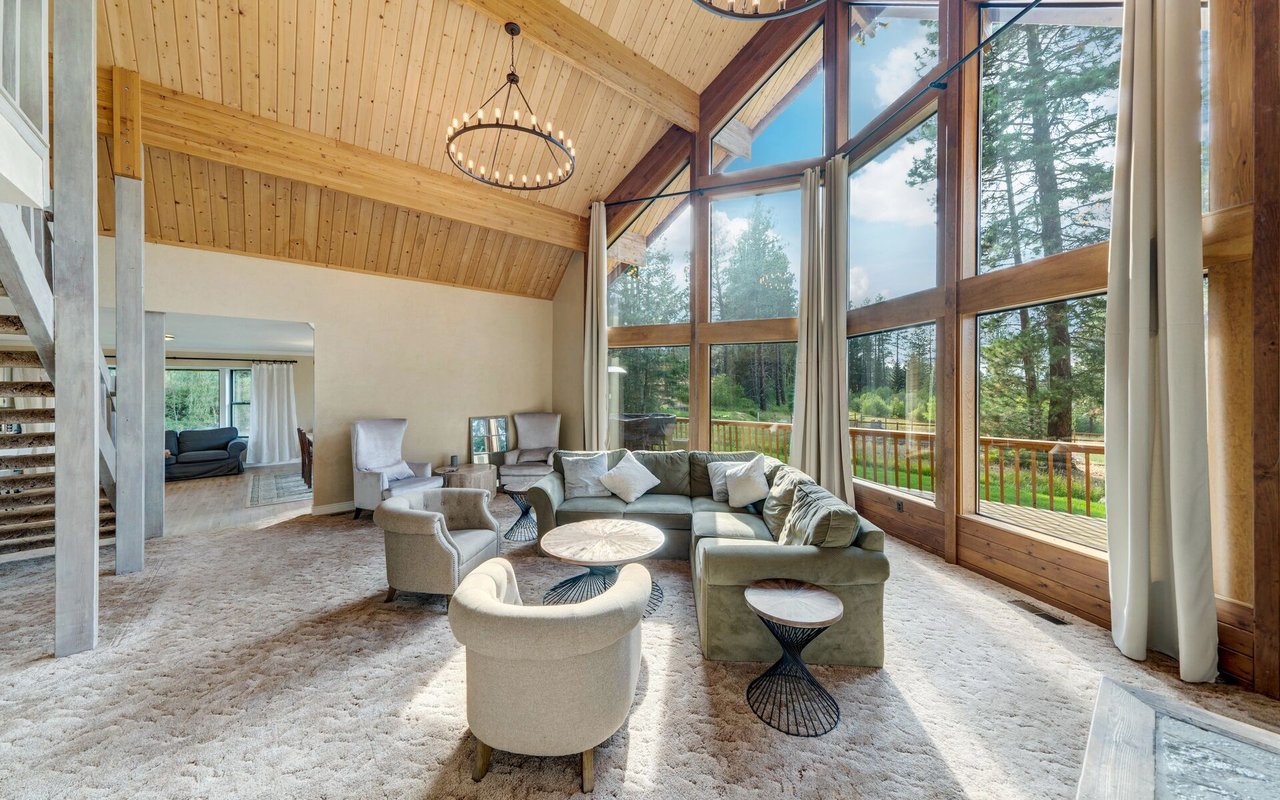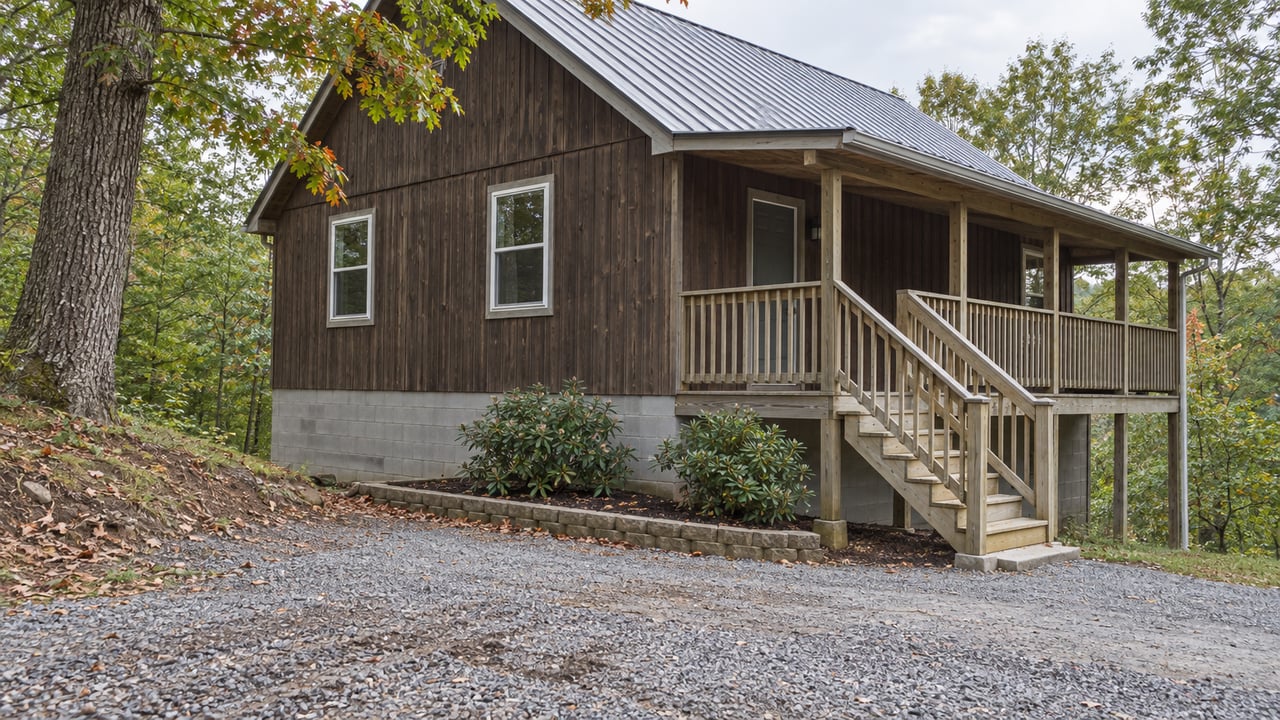
A buyer looking at a Waynesville-addressed cabin with strong short-term rental numbers is really asking one question that the address can't answer: is this parcel actually inside the town, or does it just share the town's zip code? Those are two different regulatory worlds. One has spent six years building a rulebook for whole-house rentals. The other, for now, mostly hasn't. The line between them runs through Haywood County parcels in a way no listing sheet marks, and getting it wrong is the kind of mistake that shows up after closing, not before.
That distinction matters more in Waynesville than in most Western North Carolina towns right now, because the town is mid-argument with itself about how to regulate rentals, and the argument has been going on since before most current listings even existed.
The Count That Doesn't Match the Reputation
Waynesville gets talked about as a short-term rental market, and the countywide numbers back that up. Haywood County's Tourism Development Authority reported that in 2023, a slight majority of overnight visitors, 53 percent, stayed in one of an estimated 1,975 short-term rentals rather than one of the county's 1,615 hotel rooms. The Mountaineer later put the 2024 countywide total at 1,744 short-term vacation rentals.
Inside Waynesville's actual town limits, the picture looks nothing like that scale. A compliance consultant working for the town's planning board tracked 319 short-term rentals within town limits in 2019, a climb to 444 by 2021, and a drop back to 234 by the time Smoky Mountain News reported on planning board deliberations in April 2024.
Run the math on those two counts from the same year and the town's actual share of the county's rental inventory comes out to roughly 13 percent, about one in seven. The rest sits outside town limits entirely, in unincorporated Haywood County around Maggie Valley, Canton, Clyde, and Cruso, where the town's draft ordinance has no reach at all.
That's the part a buyer chasing "Waynesville" as a short-term rental market needs to sit with. The regulatory fight everyone hears about is happening inside a small fraction of the properties that actually carry the name.
Why the Line Is Invisible on Paper
North Carolina towns extend zoning authority past their formal boundary into a buffer called the Extraterritorial Jurisdiction, or ETJ. Any short-term rental ordinance Waynesville eventually adopts will only reach parcels inside town limits and that ETJ ring. Everything past it, even a property with a Waynesville mailing address, falls under Haywood County's lighter rules instead.
A property's tax bill hints at which side of the line it sits on, but doesn't confirm it outright. A parcel inside town limits carries both municipal and county property tax and typically runs on Waynesville water, sewer, and electric service. A parcel outside town limits pays county tax only and more often relies on a private well and septic system, permitted through Haywood County Environmental Health rather than a municipal utility department.
None of that shows up as a clean yes-or-no on a listing. The only reliable way to confirm jurisdiction before writing an offer is to pull the parcel on the county's GIS mapping tool or call Waynesville's Development Services Division directly, and to ask the specific question: is this parcel inside town limits, inside the ETJ, or outside both.
Six Years of Drafts, and Why the Rules Keep Moving
Waynesville's town government has been watching short-term rental growth since 2018. The planning board first discussed regulation in 2019, took it up again in 2023, and by April 2024 had a working draft in front of it, according to Smoky Mountain News. Planning Board Chair Susan Teas Smith framed the pressure plainly at that April meeting: towns across the country are working through the same tension between rental income and housing supply.
The early draft split rentals into two categories. A homestay, where the owner lives on site and rents a room or an accessory unit, would be allowed in every residential zone. A full short-term vacation rental, the kind associated with an entire house booked through Airbnb or Vrbo, would need Town Council to decide zone by zone where it's permitted at all, with existing rentals in any newly restricted zone protected as legal nonconforming uses unless the rental activity lapsed for a full year.
By the time the planning board presented its latest draft in March 2025, reported in The Mountaineer, the idea of banning new rentals in specific neighborhoods had been dropped. Development Services Director Elizabeth Teague described the goal as distinguishing an owner renting a garage apartment from an investor buying a house purely to operate as a rental, rather than shutting either out of any particular street. The draft that survived would allow both homestays and full-property rentals in every residential zoning district, paired with operating conditions: one off-street parking space per bedroom, $500,000 in commercial general liability insurance, bear-resistant trash containers, and a local contact's phone number posted at the property.
Whether Town Council has since adopted a final version of that ordinance, and in what form, is exactly the kind of detail that shifts month to month and needs a direct call to Development Services rather than a search result, including this one. What's stable is the pattern: Waynesville has spent years narrowing an ordinance rather than abandoning the effort, and any buyer planning to operate inside town limits should expect the operating conditions to keep tightening rather than to stay fixed.
Why the Town Is Doing This at All
The push isn't happening in a vacuum. Smoky Mountain News reported that in Haywood County, where developable land is scarce and housing inventory is tight, nearly 2,000 properties have shifted out of the long-term rental market and into short-term operation. A 2021 report from the Dogwood Health Trust counted a 1,600-unit shortfall in long-term rentals countywide, a scarcity that pushes rents up for the workers who staff the county's tourism economy in the first place.
That context matters for how a buyer should read the town's caution. Waynesville isn't trying to eliminate short-term rentals, and Teague's framing of the ordinance as a distinction between homeowners and investment buyers, rather than a blanket restriction, reflects that. But the political pressure behind the ordinance is real, tied to a housing math that hasn't resolved, and it's the reason the rulebook for town-limit properties has kept moving for six years while unincorporated county parcels have stayed largely untouched.
There's also a legal backdrop worth knowing. In October 2023, Iredell County voted to implement its own short-term rental regulations, only to have a court issue a quick injunction blocking enforcement. Waynesville's planning board has been working under that shadow, aware that whatever it adopts could face the same challenge, which helps explain why the process has moved in careful drafts rather than a single vote.
Comparing the Two Rulebooks
| Inside Waynesville town limits or ETJ | Unincorporated Haywood County | |
|---|---|---|
| STR zoning rule | Draft ordinance under active revision since 2019; latest 2025 draft permits both homestays and full rentals in residential zones with operating conditions | No dedicated STR ordinance identified; short-term rentals generally treated as a permitted residential use |
| Local operating conditions | Parking, $500,000 liability insurance, bear-proof trash, posted local contact (per 2025 draft) | None specific to STRs beyond standard building and health code |
| Occupancy tax | 4 percent Haywood County occupancy tax, registered with the county Finance Office and Tourism Development Authority | Same 4 percent county tax and registration, since the tax authority is countywide |
| Property tax | Town plus county rate | County rate only |
| Utilities | Typically municipal water, sewer, electric | Typically private well and septic, permitted through county Environmental Health |
The tax line is the one piece that doesn't split along the jurisdiction boundary. Haywood County's 4 percent occupancy tax and the registration requirement through the county Finance Office and Tourism Development Authority apply whether the parcel sits inside Waynesville or three miles outside it. What changes with jurisdiction isn't the tax, it's whether the town's zoning and operating rules stack on top of that tax obligation.
Before You Write an Offer
A few concrete checks settle the jurisdiction question before it becomes a post-closing surprise:
- Pull the parcel on Haywood County's GIS mapping tool to confirm whether it falls inside Waynesville's corporate limits, its ETJ, or neither.
- Call Waynesville Development Services directly and ask for the parcel's zoning district and its current status under the town's short-term rental ordinance, since a draft in committee today may be final law by the time you close.
- Confirm occupancy tax registration status with the Haywood County Finance Office regardless of jurisdiction, since that obligation applies countywide.
- Read the HOA or deed restrictions independently of town or county rules. A zoning district that permits full-property rentals doesn't override a covenant that doesn't.
- Ask directly whether the parcel relies on private well and septic, and if so, request the most recent Haywood County Environmental Health permit records.
A Few Direct Questions
Does a Waynesville mailing address mean the property is inside town limits? Not necessarily. Properties around Waynesville, Maggie Valley, Canton, and Clyde can carry a town's mailing address while sitting in unincorporated Haywood County, outside that town's zoning authority entirely.
If my property is a homestay, do the stricter rules still apply? Under the draft the planning board has been working from, homestays, where the owner lives on site and rents a room or accessory unit, are treated differently from full-property rentals and would be protected in every residential zone rather than subject to the added operating conditions aimed at whole-house rentals.
Do I still owe occupancy tax if my property sits outside Waynesville's town limits? Yes. The 4 percent Haywood County occupancy tax and the registration requirement through the county Finance Office and Tourism Development Authority apply countywide, independent of whether the parcel falls inside or outside any town's zoning boundary.
If you're weighing a Waynesville-area purchase against its rental potential, the numbers on a listing sheet only tell half the story. The other half is a jurisdiction question worth answering before you're under contract, not after. Great Smoky Mountain Homes works this exact question with buyers across Haywood County every week, and can walk a specific parcel's zoning and tax status with you before you write an offer.