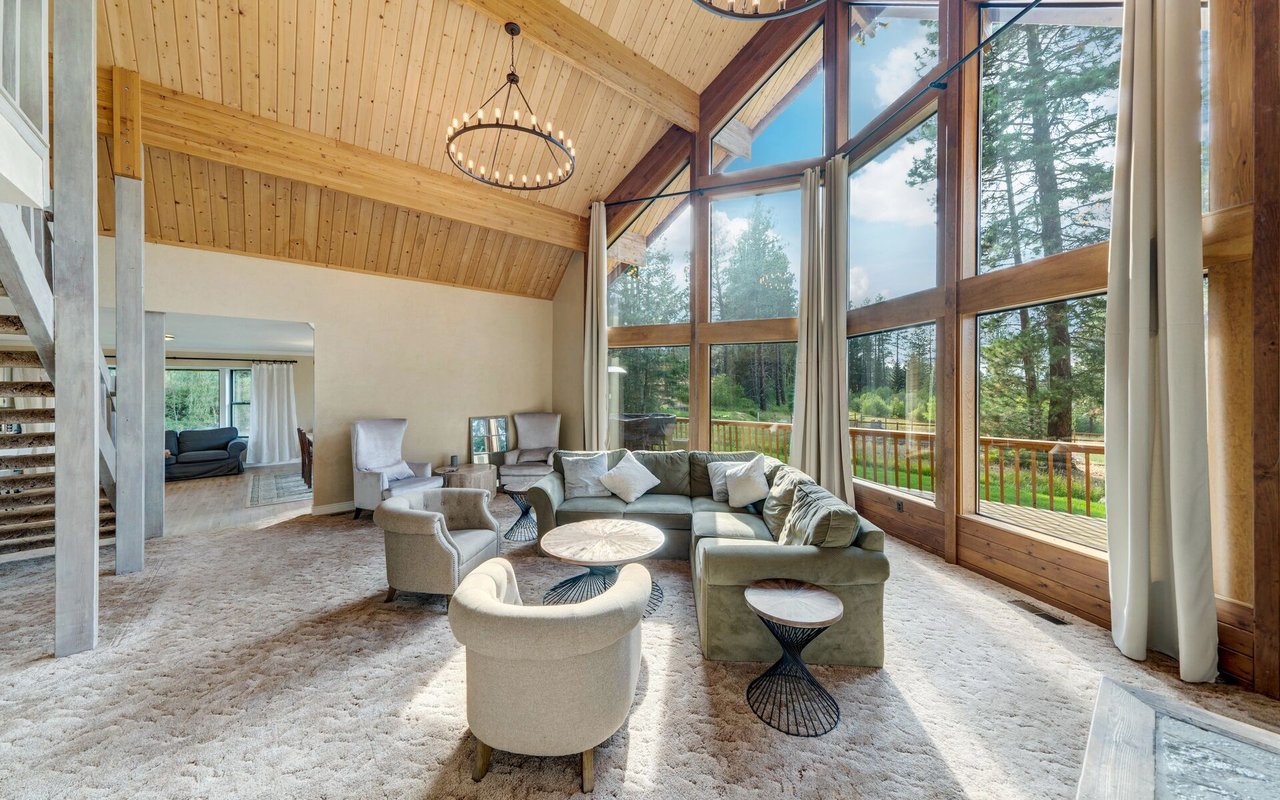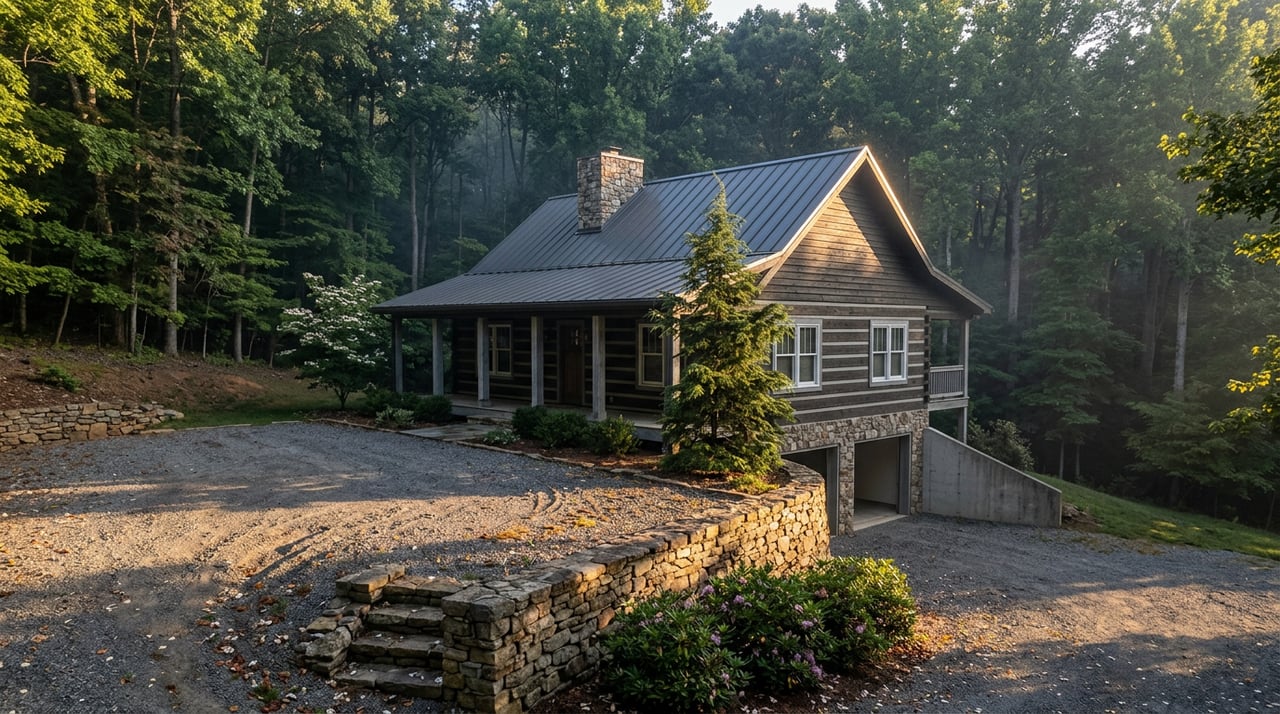
Search for a home in Cherokee, North Carolina, and you'll notice something odd within the first few results. The listings cluster around words like "unrestricted acreage" and "bordering the reservation." One recent land listing near the casino described 17.9 acres as unrestricted property close to the national park and Harrah's Casino. Another, a 98-acre tract just over a mile from the casino entrance, was pitched as bordering the Cherokee Indian Reservation in Jackson County.
Bordering it. Not in it.
That distinction is the whole story, and it is the one thing almost nobody explains to a buyer before they fall for a photo of a ridge line near Cherokee. Most of what gets marketed as Cherokee real estate sits just outside the town's actual footprint, because the town itself sits almost entirely on land you cannot buy the way you'd buy a house in Sylva or Franklin.
The Boundary You Can't Buy Into
Cherokee is the seat of the Eastern Band of Cherokee Indians, and the ground it sits on is called the Qualla Boundary, a roughly 82.6-square-mile trust held by the federal government for the tribe, stretching across parts of Swain, Jackson, and Haywood counties. It is not a subdivision or a scenic overlay. It is sovereign tribal land, and the tribe operates its own courts, its own police jurisdiction, and its own land laws inside it.
Inside that boundary, nobody holds a deed the way you'd expect. Land is assigned by Tribal Council to enrolled members as what's called a possessory holding, a right to use and occupy a specific parcel. The person doesn't own the dirt outright. They hold the right to it, and that right passes, transfers, and gets inherited according to rules written into the Cherokee Code, not the North Carolina real estate code you'd use in Sylva or Bryson City.
This is why a fee-simple sale to an outside buyer isn't something you'll find advertised for property genuinely inside the Boundary. It isn't that inventory is scarce. It's that the product doesn't exist in the form a typical listing implies.
Possessory Holdings, Not Deeds, and the Rules Are Still Being Written
If you assumed this system was settled and static, this year says otherwise. The Eastern Band's Tribal Council has been actively revising how possessory holdings work through 2026. In June, the Council tabled Ordinance No. 210, which would create a new chapter of the Cherokee Code defining the different types of joint ownership in a possessory holding, things like tenancy by the entirety between enrolled spouses, that the tribe has practiced for years without ever writing down. The same session tabled Ordinance No. 159, which would update how Tribal Council assigns possessory holdings in the first place, including what standards decide who qualifies for a piece of land. A related measure, Ordinance No. 211, would formally establish Tribal Realty Services in the Cherokee Code for the first time, something the office itself flagged as a gap, since its own realty, GIS, and surveying functions currently exist only through administrative action rather than codified authority.
Then in August, the Council took up Ordinance No. 251, addressing something that surprises a lot of people: under current code, a surviving spouse who is an enrolled member of the tribe only receives a life estate in a deceased spouse's possessory holding, not full inheritance. The proposed change is aimed at making that rule consistent across the Code.
None of this determines what happens with property outside the Boundary. But it tells you the framework governing land at the actual center of Cherokee is being actively rewritten this year, by a governing body that isn't the county register of deeds. Anyone treating "Cherokee real estate" as a fixed, familiar market is working from the wrong mental model entirely.
So What Is Actually For Sale?
Everything marketed under the Cherokee name and available to a non-member buyer sits in the fee-simple ring around the Boundary, mostly in Jackson and Swain counties, where ordinary North Carolina property law applies. That's where you'll find places like the Cherokee Bluff community, roughly five miles from the casino and seven miles from Sylva, or acreage along the highway corridor that markets its proximity to the casino, the Blue Ridge Parkway, or Great Smoky Mountains National Park without ever being part of the reservation itself.
This isn't a downgrade. Much of it is genuinely beautiful mountain land with real access to the same trailheads, rivers, and casino corridor that draw people to the area. But it changes what a buyer should expect from due diligence. Parcels that sit along or near the Boundary line have, in some documented cases, come with survey and title complications tied to the trust boundary itself. The tribe's own GIS staff have logged more than 500 parcel title searches over the years and found dozens of conflicting ownership records, cases where the person transferring land wasn't the true owner, or two parties held paperwork claiming the same tract. That kind of history is a good reason to insist on a clean, current survey and title search on anything adjacent to the Boundary, not an assumption that county records tell the whole story.
What the County Numbers Actually Measure
Because Cherokee itself doesn't generate fee-simple sales, the county-level data you'll see quoted for the area is built entirely from that surrounding ring, not from the town center. Over the three months ending in May 2026, Swain County's median home sale price came in at $357,000, down 7.3 percent from the same period a year earlier, with homes taking an average of 68 days to sell compared to 55 days the year before. Only 15 homes sold countywide in that window.
| What the number reflects | What it doesn't reflect |
|---|---|
| Fee-simple sales in the towns and unincorporated areas surrounding the Boundary | Any transaction inside the Qualla Boundary itself |
| A small, thin sample, 15 sales in three months | The scale of a normal small-town market |
| Rising days on market and softening prices in the surrounding ring | Whether demand for possessory holdings inside the Boundary is rising or falling |
A thin, softening county number isn't a verdict on Cherokee's desirability. It's a reflection of how few transactions the surrounding fee-simple ring actually produces, because the geography available to that market is naturally limited by the trust boundary sitting in the middle of it.
Questions Worth Asking Before You Get Attached to a Listing
A few things worth confirming with whoever represents the property, before you spend time on comps or financing:
- Is this parcel fee-simple, and is that confirmed by a current title search, not just the listing description
- Does any boundary line on the survey touch or approximate the Qualla Boundary, and if so, has that line been resurveyed recently
- What is the parcel's actual distance from Cherokee's town center versus its distance from the casino, since listings sometimes lean on the second number
- Are there any recorded easements or rights-of-way tied to tribal infrastructure agreements that could affect access
None of these questions require legal training to ask. They just require knowing that "Cherokee, NC" on a listing sheet is doing more work than it looks like it's doing.
A Few Questions People Ask Once They Understand This
Can a non-Native buyer ever own land inside the Qualla Boundary? Land inside the Boundary is held in trust for the tribe, and possessory holdings are assigned by Tribal Council to enrolled members. That system isn't structured around outside fee-simple purchases the way property outside the Boundary is.
Is the casino itself on the Boundary? Harrah's Cherokee Casino Resort sits on the Qualla Boundary in the town of Cherokee. Its presence there is part of why so many nearby fee-simple listings lean on proximity to it, even when the parcel itself is well outside tribal trust land.
Does buying near the Boundary mean dealing with tribal government? Not for the transaction itself, since fee-simple sales in the surrounding counties follow standard North Carolina real estate process. Where it can matter is anything touching shared infrastructure or boundary lines, which is worth flagging to your agent and attorney early rather than after closing.
If you're weighing a property near Cherokee against other towns along this corridor, the conversation is usually less about square footage and more about exactly what you'd be holding once the closing is done. That's a conversation worth having before you write an offer, not after.
Great Smoky Mountain Homes works this exact corridor every week, from the fee-simple ring around Cherokee to the towns further up the valley. Request Your Free Home Valuation and we'll walk you through what a specific parcel actually is before you spend another weekend comparing listings that may not mean what they say.