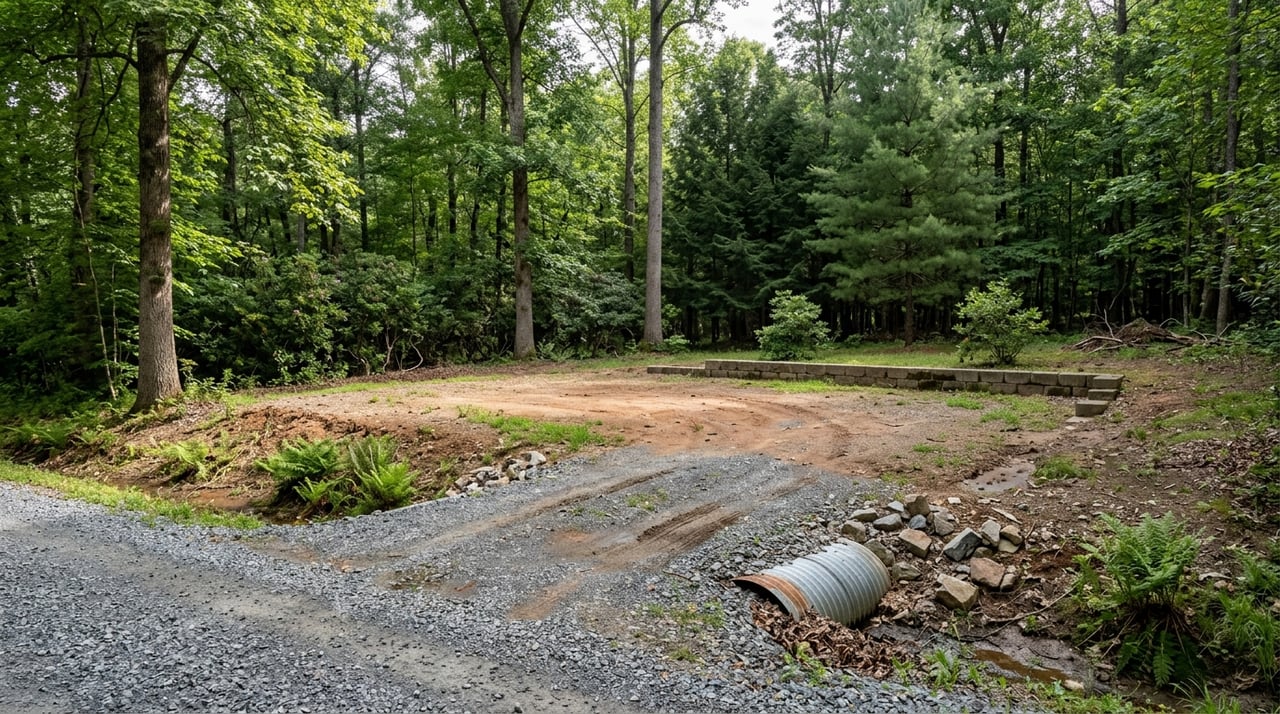
Buying land in Otto can feel simple at first. You find a beautiful parcel, picture the home or cabin you want, and start making plans. But in mountain property, the real question is not just whether you like the land. It is whether the land will work for what you want to do. In this guide, you’ll learn the key due-diligence steps to take before you buy land in Otto, NC, so you can move forward with more clarity and fewer surprises. Let’s dive in.
Understand Otto land rules
A lot of buyers assume the first thing to check is zoning. In Otto and much of unincorporated Macon County, that is not usually the main issue because Macon County’s comprehensive plan states there is no county zoning outside the municipalities of Franklin and Highlands.
That said, unzoned does not mean unregulated. County ordinances can still affect floodplain areas, watershed districts, erosion and sedimentation, and subdivision plats. If a parcel falls within Franklin or Highlands city limits or their ETJs, additional zoning restrictions may apply.
For most Otto land buyers, the bigger issue is practical feasibility. You want to know whether the parcel has legal access, a buildable homesite, and a workable plan for septic, well, drainage, and utilities.
Focus on buildability first
When you buy land in the mountains, a parcel can look great online and still be difficult to build on. Slopes, drainage, soil conditions, flood concerns, and limited usable area can all change what is possible.
That is why buildability should drive your due diligence early. Before you get too attached to the views or the privacy, confirm the basics of how the site would function for a home, driveway, septic system, well, and any future outbuildings.
Verify legal access
Access is one of the most important details to confirm before closing. It is not enough to see a road or driveway leading to the property. You need to know that your deeded access matches what exists on the ground.
If access involves the State Highway System, NCDOT notes that a driveway permit is required to obtain or modify access. NCDOT also encourages early contact with local land-use authorities and the district engineer.
Ask a few clear questions as you evaluate a parcel:
- Is there recorded legal access to the property?
- Does the deeded access match the road or driveway being used today?
- Will a new or improved driveway need NCDOT approval?
- Is the entrance practical for emergency access and everyday use?
Macon County also assigns 911 addresses to improved properties after building or electrical permits are obtained, and property numbers must be posted at the entrance. That is a helpful reminder that access and addressability matter from the start.
Check boundaries and survey details
Mountain parcels do not always tell a clear story from the road. A listing may mention acreage, road frontage, or a homesite, but you still need to verify parcel lines and physical features.
Macon County GIS can help you review parcel lines, soils, FEMA flood zones, street centerlines, structures, and subdivisions. County tax and land records can also help you review parcel maps and property information.
Still, GIS is a starting point, not a substitute for a survey. Before buying, it is smart to ask:
- Is there a current survey or survey map?
- Are the corners marked in the field?
- Do the parcel lines shown online match what you can identify on site?
- Are there any questions about encroachments, shared roads, or driveway locations?
A survey can be especially important if you are buying a larger tract, a steep parcel, or land you may want to divide later.
Understand subdivision rules
If you are buying acreage with the idea of splitting it in the future, do not assume that process will be simple. In Macon County, a division into two or more lots, building sites, or other divisions for sale or development is treated as a subdivision.
According to the Macon County subdivision ordinance, a final plat cannot be recorded until it is approved by the subdivision administrator. The process also includes an opportunity for the district highway engineer and the county health director or local utility to comment on roads, drainage, and water or sewer systems.
If future division is part of your plan, ask early what review and recording steps remain. That can affect your timeline, costs, and overall strategy.
Confirm septic feasibility
For many Otto parcels, septic is one of the biggest make-or-break items. Because many unincorporated properties in Macon County rely on private systems rather than public sewer, septic feasibility should be checked before you close.
NC State Extension recommends determining the soils on the lot, identifying what type of septic system may work, obtaining a septic improvement permit from the local health department, and estimating installation and maintenance costs before purchase. The same guidance notes that steep slopes, flooding, wetlands, rocky ground, and limited usable space can make a lot unsuitable.
Macon County Environmental Health requires a site plan or survey plat with the septic application. The county also notes that soil texture and depth, topography, and the size of the suitable area matter, and a replacement or repair area is required.
Before you buy, ask:
- Has the lot passed a septic soil evaluation?
- Is there a valid septic permit already in place?
- Is there a designated repair area?
- Will the septic layout still work with your planned homesite and driveway?
If there is an existing permit, verify the timing. NC State Extension notes that septic permits are valid for no more than five years, and the permit is tied to the submitted site plan and property layout.
Plan for a private well
Many land buyers in Otto will also need to plan for a private well. Just like septic, this is not something to assume based on nearby homes.
Macon County’s well information explains that after well-head installation is complete, the well contractor or property owner must notify the Health Department. The county will inspect the well head and collect a water-quality sample, and the well must be accessible and have a power source available for sampling.
That means well planning is part of overall site design. You want to understand where the well can be placed in relation to the home site, septic system, driveway, and available power.
Review floodplain and watershed issues
Even if a parcel looks dry during a showing, you still need to review environmental overlays. Macon County says it maintains flood-hazard maps and enforces its flood ordinance to support the National Flood Insurance Program.
The county’s planning and environmental resources and development checklist both point buyers to questions about flood hazard areas and watershed districts before development. If part of the property lies in a Special Flood Hazard Area or protected watershed district, that can influence where and how you build.
In mountain settings, drainage matters well beyond mapped flood areas. A parcel may need careful driveway grading, water management, and site planning to perform well over time.
Consider erosion and site work
Land disturbance can trigger sedimentation and erosion-control review. Macon County’s checklist also raises questions about road grades, groundcover, and whether streams or wetlands will be disturbed.
If your plans involve cutting in a driveway, clearing a homesite, or doing larger grading work, these details matter. The more challenging the terrain, the more important it is to understand how road access, drainage, and cut-and-fill work will affect your budget and timeline.
This is one reason mountain land buyers benefit from looking beyond price per acre. A less expensive parcel can become more costly if it requires significant site work to make it usable.
Verify utilities parcel by parcel
Utility availability should never be assumed. Macon County’s development checklist points property owners to local utility contacts including Duke Energy, Blue Ridge Electric, Haywood EMC, and Town of Highlands Electric, and reminds owners to call 811 before digging.
In practical terms, utility questions should be answered for the specific parcel you are buying. You will want to verify:
- Electrical service options
- Whether the site uses private well and septic
- Driveway and homesite layout in relation to utility access
- Any site-specific constraints that could affect installation
Nearby homes can be a helpful clue, but they are not proof that service is straightforward for your tract.
Know the permit path before designing
It is easy to jump ahead to house plans, but site feasibility should come first. Macon County requires plans before a building permit can be issued, and the building office handles permits for building, electrical, mechanical, plumbing, and related work.
You can review the county’s building plan requirements to understand what will be needed later in the process. For buyers, the main takeaway is simple: confirm the lot can support your goals before investing too much time and money into design.
A practical Otto land checklist
Before you buy land in Otto, make sure you have answers to these core questions:
- Can you verify the parcel on Macon County GIS and, if needed, with a surveyor?
- Do you have legal access, and will NCDOT driveway approval be required?
- Has septic feasibility been checked before closing?
- Do you understand private well requirements and water sampling steps?
- Is any part of the property in a floodplain, watershed district, or other regulated area?
- If you may divide the land later, do you understand the subdivision process?
When you are buying mountain land, the goal is not just to buy acreage. It is to buy a parcel that fits your plans with as few surprises as possible.
A local land purchase often involves connecting the dots between GIS records, planning rules, environmental health, access questions, and your long-term goals for the property. If you want help evaluating land in Otto or anywhere along the Western North Carolina mountain corridor, the team at Great Smoky Mountain Homes is here to help you move forward with confidence.
FAQs
What should you check first before buying land in Otto, NC?
- Start with buildability, legal access, septic feasibility, well needs, and parcel-specific utility availability.
Does Otto, NC have zoning for land purchases?
- In much of unincorporated Macon County, there is no county zoning outside Franklin and Highlands, but other county ordinances can still affect development.
Do you need a septic evaluation before buying land in Otto?
- Yes, checking septic feasibility before closing is one of the most important steps because many parcels rely on private septic systems.
Can you assume land in Otto has public water and sewer?
- No, many unincorporated parcels rely on private wells and septic systems, so water and sewer should be verified for each parcel.
Why is a survey important when buying land in Otto, NC?
- A survey can help confirm boundaries, corners, access, and whether what appears online matches what exists on the ground.
What if you want to subdivide land in Otto later?
- In Macon County, dividing land into two or more lots or building sites may trigger subdivision review and plat approval requirements.